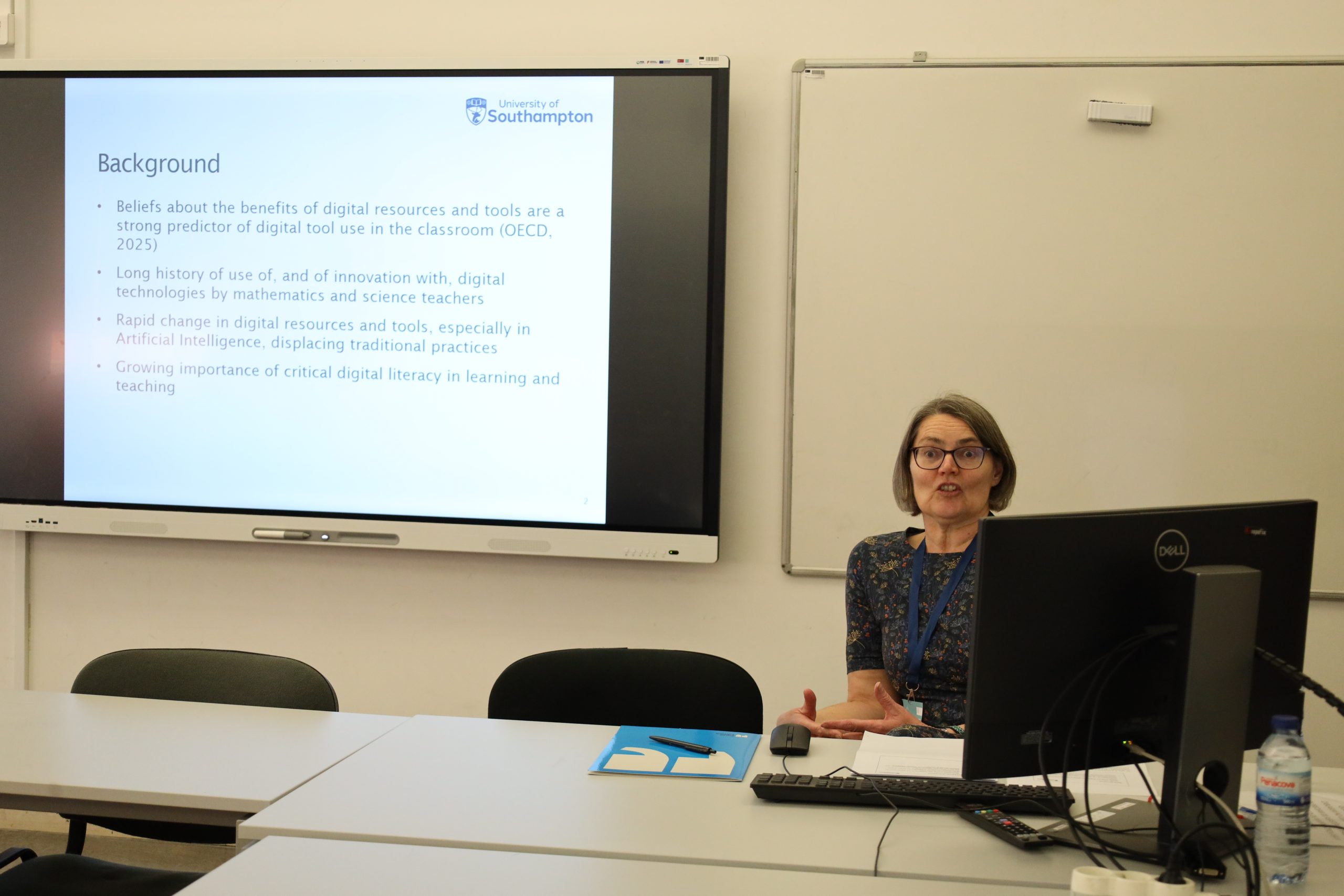
Ros recently attended the Association of Teacher Educators in Europe’s winter conference on science and mathematics education in the digital era. The conference was held at the University of Minho in Braga, Portugal. She presented a paper, co-written with Yin Wang, and titled “The use and impact of digital technologies by teachers of mathematics and science in Europe: Findings from TALIS (2024)” . The research found that teachers held high levels of self-efficacy regarding their ability to use digital resources and tools for teaching. They view digital resources and tools as helping students develop greater interest in learning. Items contributing to the latent factor ‘impact on student learning’ were considered favourably; those items impacting on student behaviour and wellbeing were not. Science teachers had higher levels of self-efficacy than mathematics teachers and there was variation between European regions. Science teachers considered digital resources and tools to have greater positive impact on student learning than mathematics teachers. Science teachers also considered digital resources and tools to have greater negative impact on student wellbeing ad behaviour than mathematics teachers.
Comments are closed